About Me
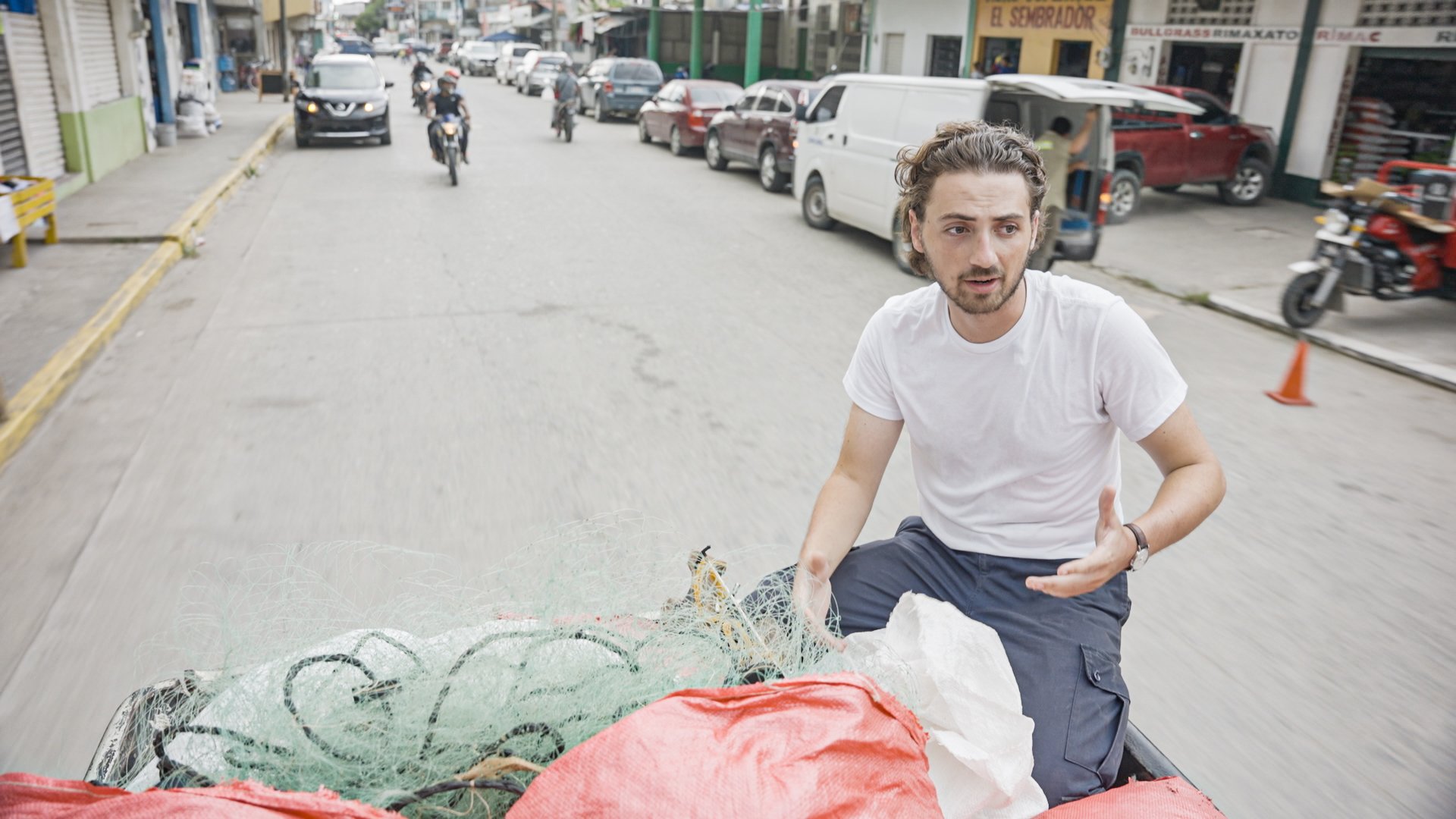
Fritz Pinnow is a German-Honduran journalist based in New York City, covering organised crime, environmental destruction, and the resilience of communities across Latin America. His work has appeared in Bloomberg, The Guardian, BBC, VICE, Mongabay, and Reuters, among others.
His work has been recognised with multiple distinctions, including the SOAS Audio Visual Awards (2023) and the YouthMediaConvention (2022) for his coverage in Colombia (2021) and Ukraine (2022). He was selected for the Canon Student Development Programme in 2023 and 2024 and won the MSF photo competition “The Other Side.”
Beyond journalism, Pinnow is an Associate at the Centre for the Study of Illicit Economies, Violence, and Development (CIVAD) in London, where he contributes as a Junior Researcher and Communications Specialist.
He has led workshops for the German Army’s Jugend Medien Programme, Jugendpresse Berlin-Brandenburg, and the Youth Media Convention, focusing on journalism in conflict zones and humanitarian crises.
Pinnow is also a certified paramedic, trained by the German Red Cross and the German Armed Forces Hospital in Berlin. He currently consults with European Medics, developing new protocols for prolonged field care in austere environments, including approaches to guerrilla medicine. He is a HEAT and HEFAT instructor, teaching medical and conflict-specific techniques, and works as a safety adviser for Vallaris Consulting Group and Merrill Herzog, specialising in armed groups and illicit economies in Latin America.
For field assignments, he owns ballistic equipment developed together with Terra-B in Berlin specifically around the needs of journalists working in high-risk environments. He has also received the Humanitarian Action Award from the British Red Cross.
-
An overarching ethical principle that places humanity at the centre of every story and guides the work in the field. In practical terms, this principle dedicates itself to storytelling and personal engagement that is focused on humanity and does not subject individuals as objects to a simplistic discourse or narrative.
-
Respectful interaction with regard to the individual's dignity should be extended throughout the process and publication of the story. The story is a joint effort and happens in collaboration with the individuals within the story, who have agency in the process.
-
Dedicates to neutral and honest storytelling, which includes a balanced set of evidence and viewpoints, engaging with complex realities instead of simplistic understandings.
-
The safety of those individuals included in a story is paramount, and I take precautions in every stage of the production and publication process to safeguard everyone involved. This includes establishing informed consent throughout every image in which individuals can identify and consider risks and make an informed decision on their participation in the publication.
Ethics Statement
This statement of ethics defines the principles after which my behaviour in the field is guided to extend ethical behaviour to the individuals involved and to the stories published.
As a photojournalist, I consider myself a witness to the events I cover, to which I provide a testament through visual storytelling, such as photography.
These are the primary ethical principles guiding the work in the field. Though especially with regard to stories on humanitarian emergencies, guidelines of Doctors without Borders (MSF) and the International Federation of the Red Cross & Red Crescent (IFRC) apply in addition to the standard Code of Ethics by the National Press Photographers Association (NPPA).